Are you truly equipped for every baking adventure your kitchen calls for? From delicate meringues to hearty loaves of bread, the right mixing bowl is more than just a container; it’s a foundational tool that can significantly influence your results. For owners of the beloved KitchenAid stand mixer, choosing the perfect mixing bowl—or bowls—can elevate your baking from good to truly exceptional. This review dives into the world of KitchenAid mixing bowls, exploring the various types, their unique advantages, and why they might just be the essential upgrade your baking needs.
Understanding KitchenAid Mixing Bowls: Materials & Benefits
KitchenAid offers a diverse range of mixing bowls, each crafted from different materials designed to meet specific culinary demands. Understanding their unique properties is key to optimizing your baking process.
Stainless Steel KitchenAid Bowls
|
Our Picks for the Best Mixing bowl in 2026
As an Amazon Associate I earn from qualifying purchases.
|
||
| Num | Product | Action |
|---|---|---|
| 1 | Priority Chef Premium Mixing Bowls With Lids Set, Airtight Lids, Thicker Stainless Steel, Non-Slip Base, 5 Nesting Steel Bowls for Kitchen, Large Prep Metal Bowl Set 1.5/2/3/4/5 Qt, Black |

|
| 2 | Fox Run Brands 2.75-Quart Stainless Steel Mixing Bowl, 9 x 9 x 4 inches, Metallic |
|
| 3 | Winco 5 Quart Heavy-Duty Stainless Steel Mixing Bowl, Deep |
|
| 4 | Umite Chef Mixing Bowls with Airtight Lids Set, 8PCS Stainless Steel Khaki Nesting Bowls with Grater Attachments, Kitchen Bowls with Non-Slip Bottoms, Size 5, 4, 3.5, 2, 1.5QT for Mixing & Serving |
|
| 5 | Winco , 8-Quart, Stainless Steel (MXB-800Q) |
|
| 6 | Glad Mixing Bowls with Pour Spout, Set of 3 | Nesting Design Saves Space | Non-Slip, BPA Free, Dishwasher Safe Plastic | Kitchen Cooking and Baking Supplies, Sage Green |
|
| 7 | Cuisinart Mixing Bowl Set, Stainless Steel, 3-Piece, CTG-00-SMB |
|
| 8 | JoyJolt Stainless Steel Mixing Bowl Set - 6 Piece Nesting Bowls, 5qt to 0.5qt, Ideal for Kitchen, Cooking, Baking and Storage |
|
| 9 | Glad Mixing Bowls with Pour Spout, Set of 3 | Nesting Design Saves Space | Non-Slip, BPA Free, Dishwasher Safe Plastic | Kitchen Cooking and Baking Supplies, White |
|
| 10 | OXO Good Grips 5-Quart Mixing Bowl |
|
Stainless steel bowls are a workhorse in any baker’s kitchen, lauded for their enduring quality and practicality. They are remarkably durable and lightweight, making them easy to handle, especially when dealing with large quantities of dough or batter. A significant advantage is their ability to maintain temperature, keeping ingredients cool—an invaluable feature for recipes like whipped cream or when cutting cold butter into flour. Many models feature convenient comfort handles and can even be gently warmed over a flame for specific tasks.
Despite their many benefits, stainless steel bowls are generally not recommended for use in the microwave or oven. Some users also note that thickly rolled rims on certain designs can lead to less controlled pouring and potential dripping.
Glass KitchenAid Bowls
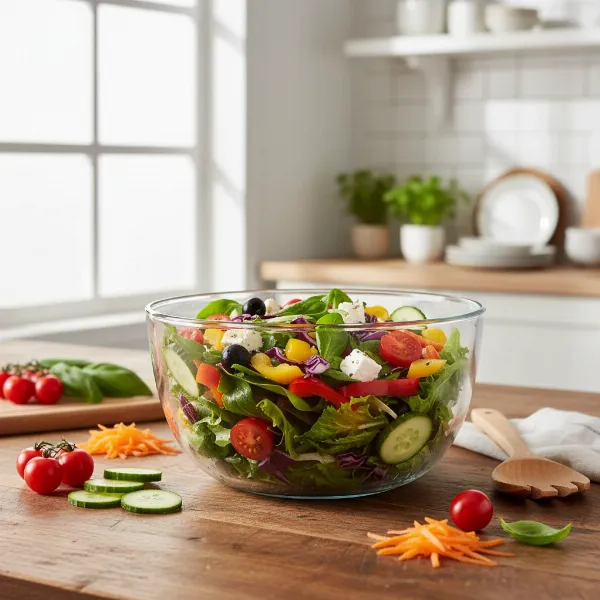
For bakers who appreciate both form and function, KitchenAid’s glass mixing bowls are a popular choice. Their transparency allows for unparalleled visibility, letting you monitor the mixing process with ease, whether you’re emulsifying a sauce or observing dough as it proofs. Many glass bowls come with molded measurement markings, simplifying ingredient additions. Made from tempered glass, they are robust enough to be microwave-safe, freezer-safe, and dishwasher-safe, offering incredible versatility for tasks like melting chocolate or chilling mixtures. They often include a pouring spout for mess-free transfers.
However, the elegance of glass comes with a trade-off: these bowls are heavier and more susceptible to breakage if dropped. While durable, care should be taken to avoid sharp utensils that could scratch the surface.
Ceramic KitchenAid Bowls
Ceramic mixing bowls from KitchenAid blend aesthetic appeal with remarkable functionality. These bowls are often chip-resistant, crack-resistant, and stain-resistant, making them a long-lasting addition to your kitchen. Their superior heat retention capabilities make them excellent for proofing dough, keeping it at a consistent temperature for optimal rise. A standout feature is their oven-safe property, with some ceramic bowls designed specifically to go from mixer to oven, perfect for baking bread directly. They are also microwave-safe, freezer-safe, and dishwasher-safe, providing broad utility.
While stunning and highly versatile, ceramic bowls are heavier than stainless steel and can be more expensive. Their solid nature means less visibility during mixing compared to glass, but their decorative patterns can add a touch of charm to your kitchen.
Specialty & Plastic KitchenAid Bowls
Beyond the main materials, KitchenAid also ventures into specialty options. For instance, copper bowls offer a unique benefit for whipping egg whites, as the copper ions interact with proteins to create a fluffier, more stable meringue or mousse. While not standard, these can be a game-changer for specific baking tasks. KitchenAid also produces classic plastic mixing bowl sets, often prized for their extreme lightweight nature, affordability, and practical features like non-slip bases and pouring spouts, ideal for everyday, less intensive mixing. It’s always advisable to ensure any plastic bowls are BPA-free and adequately heat-resistant for their intended use.
KitchenAid Mixing Bowl Comparison: Stainless Steel vs. Glass vs. Ceramic
Choosing the right KitchenAid mixing bowl often comes down to your primary baking activities and personal preferences. Here’s a comparative look at the main materials:
| Feature | Stainless Steel | Glass | Ceramic |
|---|---|---|---|
| Durability | High | Medium (can break) | High (chip-resistant) |
| Weight | Light | Heavy | Heavy |
| Temp. Versatility | Chillable, warms over flame | Microwave, freezer, dishwasher safe | Oven, microwave, freezer, dishwasher safe |
| Visibility | None | High | None |
| Aesthetic | Modern, functional | Elegant, classic | Decorative, artisanal |
| Best Use | Heavy mixing, chilling, meringues | Visual monitoring, melting, proofing | Bread baking, oven use, proofing |
Are KitchenAid Mixing Bowls Essential for Baking?
The question of whether KitchenAid mixing bowls are “essential” for baking is one many home chefs ponder. While you can certainly get by with a single standard bowl, incorporating a variety of KitchenAid bowls into your baking arsenal transforms your experience from functional to truly efficient and enjoyable.
For multi-step recipes, having a second or even a third bowl can be incredibly convenient. Imagine whipping egg whites to stiff peaks in one bowl while your main batter rests in another, or preparing a frosting without having to wash the bowl used for the cake batter mid-process. As one experienced baker notes, “I have two bowls for my KitchenAid and I would be lost without the extra. I often bake more than one thing at a time (bread and cake, two cakes, cookies and cake) and I like being able to leave the dough to rise in one bowl while I mix the next batch.” This sentiment highlights the significant time-saving and organizational benefits.
Furthermore, specific baking tasks benefit immensely from particular bowl materials. Glass bowls, for instance, are superior for visually monitoring yeast dough as it proofs or for melting butter in the microwave. Stainless steel excels at keeping temperature-sensitive ingredients cool, which is crucial for perfect whipped cream. And for dedicated bread makers, the ceramic bread bowl attachment, designed to go from mixer to oven, simplifies the entire process from kneading to baking. KitchenAid bowls are specifically designed to integrate seamlessly with your stand mixer, ensuring optimal performance and stability during vigorous mixing. This compatibility means beaters reach all ingredients efficiently, preventing unmixed pockets and ensuring consistent results.
Ultimately, while basic baking can be achieved with minimal equipment, investing in specialized KitchenAid mixing bowls empowers you to tackle complex recipes with greater ease, achieve professional-level results, and expand your culinary repertoire. They are not merely containers; they are specialized tools that enhance precision, efficiency, and the overall joy of baking.
Choosing the Perfect KitchenAid Mixing Bowl for Your Baking Needs
Selecting the ideal KitchenAid mixing bowl requires a thoughtful assessment of your baking habits and preferences.
Assess Your Baking Frequency & Type
Consider what you bake most often. Are you a passionate bread maker who would benefit from a ceramic bread bowl that goes directly into the oven? Or do you frequently bake cakes and pastries, making a clear glass bowl for precise visual monitoring or a stainless steel one for chilling buttercream more appropriate? If you often prepare multiple components for a single recipe, having multiple bowls of different materials can be a game-changer.
Consider Capacity & Mixer Compatibility
KitchenAid offers bowls in various capacities, from 3-quart mini bowls to large 8-quart commercial sizes. Ensure the bowl you choose is compatible with your specific KitchenAid stand mixer model, whether it’s a tilt-head or bowl-lift design. Matching the bowl to your mixer is crucial for proper attachment function and stability during operation. Assess your typical batch sizes—a smaller bowl might suffice for everyday tasks, while a larger one is indispensable for holiday baking or entertaining.
Prioritize Material Benefits
Each material offers distinct advantages. If microwave-safe convenience for melting ingredients or an elegant serving option is paramount, a glass or ceramic bowl might be your top choice. If durability, lightweight design, and the ability to chill ingredients quickly are more important, stainless steel stands out. Bakers who work with delicate meringues might even explore specialty copper options for their unique effect on egg whites.
Evaluate Additional Features
Look for features that enhance usability. Pour spouts are excellent for transferring liquid batters without mess. Comfortable handles provide a secure grip, especially when pouring heavy mixtures. Lids are a bonus for dough proofing or convenient food storage. Non-slip bases on some plastic bowls offer stability on the countertop during manual mixing.
Budget Versus Investment
KitchenAid mixing bowls represent an investment in your baking journey. While some options are more budget-friendly, the higher cost of specialty or ceramic bowls often reflects their enhanced functionality, durability, and versatility. Consider the long-term benefits and how a particular bowl will improve your efficiency and results over time.
Conclusion
KitchenAid mixing bowls are far more than simple accessories; they are integral components that can profoundly impact your baking experience. From the robust utility of stainless steel to the clear precision of glass and the versatile charm of ceramic, each material offers distinct advantages tailored to different culinary needs. While a basic bowl suffices for some, incorporating a selection of KitchenAid bowls, especially a second one for multi-step recipes, proves invaluable for efficiency, enhanced results, and sheer baking pleasure. They truly can be an essential tool, empowering you to bake smarter, more creatively, and with consistently superior outcomes. Which KitchenAid mixing bowl will be the next indispensable addition to your kitchen?
Frequently Asked Questions
What are the main types of KitchenAid mixing bowls?
KitchenAid primarily offers mixing bowls in stainless steel, glass, and ceramic. Each material provides unique benefits for bakers, with stainless steel known for durability, glass for visibility and multi-functionality (microwave/freezer safe), and ceramic for aesthetics, heat retention, and oven-safe capabilities, particularly for bread baking.
Can KitchenAid mixer bowls be interchanged between different mixer models?
Compatibility depends on the mixer type (tilt-head vs. bowl-lift) and capacity. While many bowls are designed for specific models, within each stand mixer type, there are often interchangeable options in different materials and sizes. Always check the manufacturer’s specifications to ensure a proper fit.
Is it worth buying a second KitchenAid mixing bowl?
Absolutely. Many experienced bakers find a second bowl highly beneficial for efficiency. It allows you to prepare different components of a recipe simultaneously, such as whipping egg whites while a batter rests, or mixing frosting without needing to wash the bowl between steps, significantly streamlining your baking process.
Can I bake directly in a KitchenAid ceramic mixing bowl?
Yes, many KitchenAid ceramic mixing bowls, especially specialized attachments like the bread bowl with baking lid, are designed to be oven-safe. They can withstand high temperatures, allowing you to mix, proof, and bake bread or other dishes all in the same bowl, simplifying your workflow and reducing cleanup.
Which KitchenAid bowl is best for proofing dough?
Glass and ceramic KitchenAid bowls are excellent for proofing dough. Glass bowls offer the advantage of transparency, allowing you to visibly monitor the dough’s rise, while ceramic bowls provide superior heat retention, creating a consistent warm environment ideal for yeast activation and optimal proofing.