Have you ever wondered why your casserole bakes perfectly in a glass dish, but your cookies come out just right on a metal sheet? Or why some travel mugs keep coffee hot for hours while others let it cool almost instantly? The answer lies in the fundamental thermal properties of glass and metal, two materials ubiquitous in our kitchens and daily lives. Understanding how each interacts with heat—from absorption to retention and transfer—is key to mastering everything from cooking and baking to food storage and enjoying your favorite beverages at the ideal temperature. This article will delve into the science behind glass and metal’s thermal behavior, helping you make informed choices for all your temperature retention needs.
Understanding the Science of Heat Transfer
To truly grasp why glass and metal behave differently with heat, we must first understand the core scientific principles at play: thermal conductivity and specific heat capacity. These two properties dictate how quickly a material absorbs, transfers, and retains thermal energy.
Thermal Conductivity
|
Our Picks for the Best Mixing bowl in 2026
As an Amazon Associate I earn from qualifying purchases.
|
||
| Num | Product | Action |
|---|---|---|
| 1 | Glad Mixing Bowls with Pour Spout, Set of 3 | Nesting Design Saves Space | Non-Slip, BPA Free, Dishwasher Safe Plastic | Kitchen Cooking and Baking Supplies, White |

|
| 2 | Glad Mixing Bowls with Pour Spout, Set of 3 | Nesting Design Saves Space | Non-Slip, BPA Free, Dishwasher Safe Plastic | Kitchen Cooking and Baking Supplies, Sage Green |
|
| 3 | OXO Good Grips 5-Quart Mixing Bowl |
|
| 4 | Fox Run Brands 2.75-Quart Stainless Steel Mixing Bowl, 9 x 9 x 4 inches, Metallic |
|
| 5 | Winco 5 Quart Heavy-Duty Stainless Steel Mixing Bowl, Deep |
|
| 6 | Winco , 8-Quart, Stainless Steel (MXB-800Q) |
|
| 7 | Cuisinart Mixing Bowl Set, Stainless Steel, 3-Piece, CTG-00-SMB |
|
| 8 | Priority Chef Premium Mixing Bowls With Lids Set, Airtight Lids, Thicker Stainless Steel, Non-Slip Base, 5 Nesting Steel Bowls for Kitchen, Large Prep Metal Bowl Set 1.5/2/3/4/5 Qt, Black |
|
| 9 | JoyJolt Stainless Steel Mixing Bowl Set - 6 Piece Nesting Bowls, 5qt to 0.5qt, Ideal for Kitchen, Cooking, Baking and Storage |
|
| 10 | Umite Chef Mixing Bowls with Airtight Lids Set, 8PCS Stainless Steel Khaki Nesting Bowls with Grater Attachments, Kitchen Bowls with Non-Slip Bottoms, Size 5, 4, 3.5, 2, 1.5QT for Mixing & Serving |
|
Thermal conductivity is a measure of how efficiently a material can transfer heat through itself. Materials with high thermal conductivity allow heat to pass through them quickly, while those with low thermal conductivity act as insulators, slowing down heat transfer. Metals, such as copper, aluminum, and stainless steel, are renowned for their high thermal conductivity. This is largely due to the presence of free electrons that can rapidly carry thermal energy across the material. For instance, aluminum conducts heat significantly better than glass, by a factor of 150 to 300 times. Glass, on the other hand, possesses a much lower thermal conductivity, meaning heat moves through it at a considerably slower pace.
Specific Heat Capacity
Specific heat capacity refers to the amount of heat energy required to raise the temperature of a unit mass of a substance by one degree Celsius. A material with a high specific heat capacity can absorb a large amount of heat energy before its own temperature significantly increases, and it will also release that stored heat slowly. Conversely, a material with a low specific heat capacity requires less energy to heat up and will lose that heat more readily. While specific values vary, glass typically has a higher specific heat capacity compared to many common metals like copper and stainless steel, meaning it can store more heat once it reaches a certain temperature.
Heat Retention vs. Heat Transfer
It’s crucial to differentiate between heat retention and heat transfer. High thermal conductivity means excellent heat transfer, allowing a material to quickly distribute heat throughout itself and to its surroundings. This is characteristic of metals. High heat retention, however, means a material, once heated, holds onto that thermal energy for a longer period, releasing it slowly. This is where materials with lower thermal conductivity and higher specific heat capacity, like glass, can shine. Metal heats up and cools down quickly due to its superior thermal conductivity, while glass heats up slowly but retains that heat remarkably well once hot.
Glass: The Steady Retainer
Glass, particularly borosilicate glass used in bakeware, offers distinct advantages when it comes to temperature management in certain applications. Its unique thermal properties make it a champion for slow, even heating and sustained warmth.
Advantages of Glass for Heat Retention
Once glass reaches its desired temperature, it becomes an excellent heat retainer. This is primarily due to its low thermal conductivity, which slows the rate at which heat escapes. This characteristic allows for more consistent, even heating throughout a dish, preventing burnt edges or cold spots, which is highly beneficial for items like casseroles and baked goods that require prolonged cooking. Furthermore, glass is non-reactive, meaning it won’t leach flavors or chemicals into your food, and its transparency allows you to monitor cooking progress without opening the oven.
Disadvantages and Considerations
Despite its benefits, glass also presents challenges. Its low thermal conductivity means it takes a longer time to heat up initially compared to metal. More critically, glass is susceptible to thermal shock—rapid temperature changes can cause it to crack or shatter due to uneven expansion or contraction. This makes it unsuitable for stovetop searing or direct high heat applications where quick temperature adjustments are needed. Glass is also generally heavier than metal, which can be a consideration for handling larger dishes.
Best Uses for Glass
Glass bakeware truly excels in the oven. It’s ideal for:
- Casseroles and Lasagnas: Providing consistent, gentle heat for thorough cooking.
- Baked Goods (e.g., cakes, breads): Promoting even browning and a tender crumb.
- Roasting Vegetables: Allowing for slow caramelization.
- Serving Dishes: Keeping food warm at the table for longer.
- Food Storage: Glass containers, especially those made from borosilicate, are excellent for reheating and storing food safely without flavor transfer.
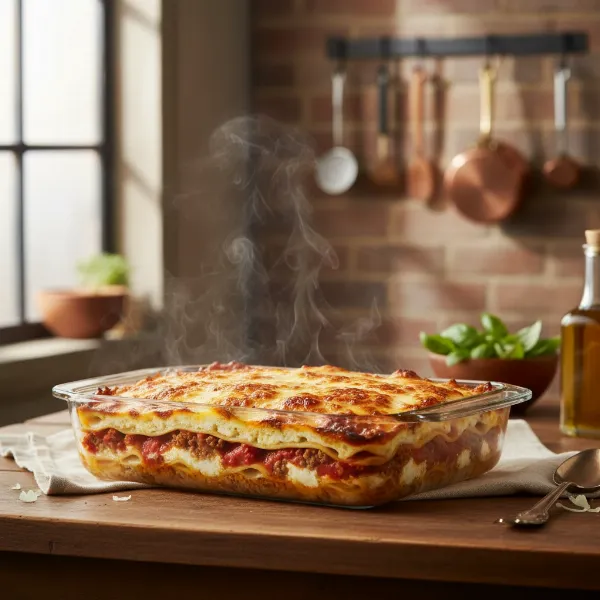 A glass casserole dish with a cooked lasagna, showcasing even browning and steam, highlighting its excellent heat retention properties for baking.
Metal: The Rapid Responder
Metal, in its various forms, offers a contrasting set of thermal characteristics, making it the preferred choice for applications requiring quick heating, precise temperature control, and efficient heat transfer.
Advantages of Metal for Heat Transfer and Responsiveness
Metals boast high thermal conductivity, allowing them to heat up very quickly and respond almost instantaneously to changes in heat input. This makes them incredibly versatile for stovetop cooking. Materials like aluminum and copper are particularly favored for their rapid and even heat distribution across their surface, ensuring that food cooks uniformly. Stainless steel, while slightly less conductive than copper or aluminum, is highly durable, non-reactive (unlike some bare metals), and maintains its structural integrity under high heat.
Disadvantages and Considerations
While metals are quick to heat, they are also quick to cool if not insulated. Without proper insulation, a metal container will lose heat to the surroundings more rapidly than glass. Also, some metals, like unlined copper or aluminum, can react with acidic foods, potentially altering flavor or color. Hotspots can also form in thinner metal pans if the heat source is uneven, leading to inconsistent cooking results if not managed carefully.
Best Uses for Metal
Metal cookware and containers are indispensable for numerous tasks:
- Searing and Browning: Achieving a crisp, flavorful crust on meats and vegetables quickly.
- Sautéing and Stir-Frying: Rapidly cooking ingredients with precise temperature control.
- Broiling: Delivering intense, direct heat for quick finishing.
- Baking (e.g., cookies, pastries): Promoting fast, even cooking and crisp textures.
- Insulated Food Storage: Stainless steel vacuum-insulated containers (thermoses) are the gold standard for keeping food and beverages hot (or cold) for extended periods. [cite: 3, 5 (food storage)]
> “The choice between glass and metal fundamentally comes down to thermal conductivity. If you need quick heat transfer and responsiveness, metal is your ally. If slow, even heating and sustained retention are paramount, glass takes the lead, but always be mindful of thermal shock.” – Dr. Anya Sharma, Materials Science Specialist
A Direct Comparison: Glass vs. Metal in Action
The decision to use glass or metal often depends on the specific culinary or storage goal. Understanding their core differences side-by-side helps illustrate their strengths.
Material Comparison for Temperature Retention
| Feature | Glass (e.g., Borosilicate) | Metal (e.g., Stainless Steel, Aluminum) |
|---|---|---|
| Thermal Conductivity | Low | High |
| Heat Up Speed | Slow | Fast |
| Heat Retention (uninsulated) | Excellent (once hot) | Poor (cools quickly) |
| Heat Distribution | Very even | Even (can have hotspots if thin) |
| Thermal Shock Resistance | Low (prone to shattering) | High (can warp) |
| Reactivity with Food | Non-reactive | Can be reactive (e.g., aluminum) |
| Weight | Heavier | Lighter (aluminum) to moderate (steel) |
| Durability | Brittle | Robust |
| Best For | Casseroles, slow baking, serving | Searing, quick cooking, insulated storage |
Different Types of Metals
It’s also important to note that “metal” isn’t a single entity when it comes to thermal properties.
- Copper: Exceptionally high thermal conductivity, heats and cools extremely fast, but often expensive and requires lining to prevent reactivity.
- Aluminum: High thermal conductivity, lightweight, and heats relatively quickly and evenly, making it popular for baking sheets and lightweight cookware.
- Stainless Steel: Good thermal conductivity, highly durable, non-reactive, and rust-resistant. It’s a common choice for cookware and insulated containers, though it doesn’t conduct heat as quickly as copper or aluminum. Often used in multi-ply construction to enhance performance.
When to Choose Which Material
The optimal material choice hinges entirely on your objective, whether you are cooking, storing, or serving.
For Cooking and Baking
When cooking, the material of your cookware directly impacts the outcome. For dishes that benefit from steady, prolonged heat, like a hearty casserole or a slow-roasted chicken, a glass baking dish is often superior. It heats up gradually and maintains a consistent temperature, leading to thoroughly cooked, evenly browned results. Conversely, for tasks requiring rapid heat transfer, such as searing a steak to achieve a perfect crust, sautéing vegetables, or quickly baking cookies, metal pans are indispensable. Their ability to heat up and cool down quickly gives you greater control over the cooking process.
For Food Storage
For storing hot food, especially for extended periods, the clear winner is insulated metal. Double-walled, vacuum-insulated stainless steel containers (thermoses) are designed specifically to minimize heat transfer and maintain internal temperatures for hours. [cite: 5 (food storage)] While glass containers can keep food warm if preheated, they lack the superior insulating properties of a vacuum-sealed metal thermos and are more prone to breakage during transport. For refrigeration or reheating in a microwave, glass containers are excellent due to their non-reactive nature and transparency.
For Beverages
Keeping beverages hot for a long time, such as coffee or tea on the go, also heavily favors insulated metal. Stainless steel travel mugs with vacuum insulation are designed to hold heat for several hours, making them ideal for commuting or outdoor activities. [cite: 3 (food storage)] While a glass mug is pleasant for immediate consumption, it will rapidly lose heat to the environment compared to its insulated metal counterpart. For serving hot drinks at home, glass can be an elegant choice, but be prepared for quicker cooling.
 A sleek, insulated stainless steel thermos bottle filled with hot coffee, steam rising, illustrating superior heat retention for beverages.
The Role of Insulation in Heat Retention
While the intrinsic properties of glass and metal are important, insulation plays a paramount role in maximizing temperature retention for both hot and cold items. Modern food storage and beverage containers heavily rely on advanced insulation techniques to defy the natural laws of heat transfer.
The most effective method for minimizing heat loss is vacuum insulation, typically found in double-walled containers made of stainless steel. In this design, two layers of metal create an airtight space between them from which air has been removed. This vacuum acts as a powerful barrier, dramatically reducing heat transfer by conduction and convection. [cite: 5 (food storage)] Without air, there are fewer particles to carry thermal energy from the inner wall (where your hot food is) to the outer wall and then to the environment. This is why a good quality stainless steel thermos can keep liquids hot for many hours, outperforming any uninsulated glass or metal container for long-term temperature maintenance.
Conclusion
When deciding between glass and metal, there’s no single “better” material; rather, it’s about choosing the right tool for the job. Metal excels at rapid heat transfer and quick temperature responsiveness, making it ideal for searing, sautéing, and baking items that benefit from a crisp finish. Glass, with its lower thermal conductivity and higher specific heat capacity, shines in providing slow, even heat and superior retention once heated, perfect for casseroles and dishes requiring gentle, consistent cooking. For prolonged temperature retention in food and beverages, especially on the go, insulated stainless steel emerges as the undisputed champion, thanks to its robust design and vacuum insulation technology. By understanding these distinct thermal characteristics, you can elevate your culinary endeavors and ensure your food and drinks are always at their optimal temperature. What role do glass and metal play in your daily kitchen routine, and how might a deeper understanding of their properties change your approach?
Frequently Asked Questions
Which material heats up faster, glass or metal?
Metal heats up significantly faster than glass. Metals have high thermal conductivity, allowing heat to transfer quickly through them, which is why metal pans rapidly reach high temperatures on a stovetop or in an oven.
Is glass or metal better for baking casseroles?
Glass is generally better for baking casseroles. Its lower thermal conductivity means it heats up slowly but retains heat very well once hot, ensuring a consistent, even cooking temperature throughout the dish, which is ideal for slow-cooked items.
Why do insulated travel mugs keep drinks hot for so long?
Insulated travel mugs, typically made of double-walled stainless steel with a vacuum seal, keep drinks hot for extended periods by minimizing all three forms of heat transfer: conduction, convection, and radiation. The vacuum layer acts as a powerful insulator. [cite: 5 (food storage)]
Can I use a glass dish on the stovetop?
No, it is generally not safe to use a regular glass dish directly on the stovetop. Glass is susceptible to thermal shock, meaning rapid or uneven temperature changes can cause it to crack or shatter. Always check if the specific glass product is rated for stovetop use.
Does the thickness of the material affect heat retention?
Yes, generally, thicker materials can store more thermal energy due to increased mass, which contributes to better heat retention. However, intrinsic material properties like thermal conductivity and specific heat capacity are more fundamental in determining overall performance.
Which is more durable for everyday use, glass or metal?
Metal, particularly stainless steel, is typically more durable for everyday use due to its resistance to impact and thermal shock compared to glass, which is brittle and prone to shattering or chipping. This makes metal preferred for items like travel mugs and robust cookware.