Choosing the perfect stand mixer bowl might seem straightforward, but it’s a decision that profoundly impacts your baking experience and results. Just like a seasoned chef selects the ideal pan for a dish, the right bowl size ensures your ingredients mix efficiently, without spills or unmixed pockets. Have you ever struggled with dough overflowing or a small amount of batter not reaching the whisk? That’s precisely why understanding stand mixer bowl capacities and materials is crucial. This guide will help you navigate the options, ensuring your stand mixer becomes the versatile culinary partner you always envisioned.
Understanding Stand Mixer Bowl Sizes
Stand mixer bowls come in a variety of capacities, each designed to cater to different baking volumes and needs. Identifying the most common sizes and their ideal uses is the first step in making an informed choice. From whipping up a quick batch of cookies to kneading multiple loaves of bread, there’s a bowl size perfectly suited for your task.
3.5-Quart to 4.5-Quart Bowls: Compact and Convenient
|
Our Picks for the Best Mixing bowl in 2026
As an Amazon Associate I earn from qualifying purchases.
|
||
| Num | Product | Action |
|---|---|---|
| 1 | Cuisinart Mixing Bowl Set, Stainless Steel, 3-Piece, CTG-00-SMB |

|
| 2 | Glad Mixing Bowls with Pour Spout, Set of 3 | Nesting Design Saves Space | Non-Slip, BPA Free, Dishwasher Safe Plastic | Kitchen Cooking and Baking Supplies, Sage Green |
|
| 3 | OXO Good Grips 5-Quart Mixing Bowl |
|
| 4 | Umite Chef Mixing Bowls with Airtight Lids Set, 8PCS Stainless Steel Khaki Nesting Bowls with Grater Attachments, Kitchen Bowls with Non-Slip Bottoms, Size 5, 4, 3.5, 2, 1.5QT for Mixing & Serving |
|
| 5 | Priority Chef Premium Mixing Bowls With Lids Set, Airtight Lids, Thicker Stainless Steel, Non-Slip Base, 5 Nesting Steel Bowls for Kitchen, Large Prep Metal Bowl Set 1.5/2/3/4/5 Qt, Black |
|
| 6 | Winco , 8-Quart, Stainless Steel (MXB-800Q) |
|
| 7 | Winco 5 Quart Heavy-Duty Stainless Steel Mixing Bowl, Deep |
|
| 8 | Fox Run Brands 2.75-Quart Stainless Steel Mixing Bowl, 9 x 9 x 4 inches, Metallic |
|
| 9 | JoyJolt Stainless Steel Mixing Bowl Set - 6 Piece Nesting Bowls, 5qt to 0.5qt, Ideal for Kitchen, Cooking, Baking and Storage |
|
| 10 | Glad Mixing Bowls with Pour Spout, Set of 3 | Nesting Design Saves Space | Non-Slip, BPA Free, Dishwasher Safe Plastic | Kitchen Cooking and Baking Supplies, White |
|
These smaller bowls are typically found with mini stand mixers or as secondary bowls for larger models. They are ideal for individuals or small households who bake infrequently or prepare smaller quantities. Think single batches of cookies, modest cakes, or small amounts of whipped cream. Their compact size makes them easier to handle and store, perfect for kitchens with limited counter space.
5-Quart Bowls: The Versatile Workhorse
The 5-quart bowl is arguably the most popular and versatile size, often included as the standard with many full-sized stand mixers. It strikes an excellent balance between capacity and manageability, making it suitable for a wide array of recipes. From medium batches of cake batter and cookie dough to preparing frosting or mixing everyday meals, a 5-quart bowl can handle most common kitchen tasks with ease.
6-Quart and Larger Bowls: For the Serious Baker
When you’re baking for a large family, entertaining frequently, or tackling ambitious recipes like multiple loaves of bread or industrial-sized batches of cookies, a 6-quart or larger bowl becomes indispensable. These heavy-duty bowls are designed to accommodate substantial volumes, ensuring all ingredients are thoroughly incorporated without overflowing. Some professional-grade stand mixers even offer 7-quart or 8-quart capacities, ideal for very large-scale baking or commercial use. These larger bowls provide ample space for dense doughs to develop and expand, preventing strain on your mixer’s motor.
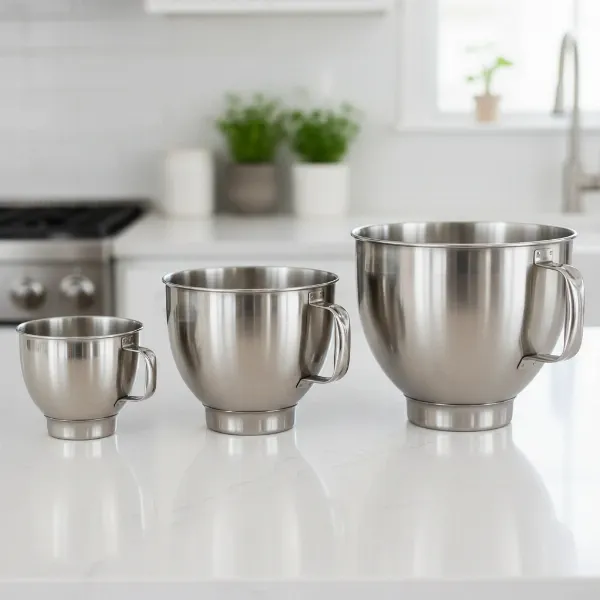 A comparison of various stand mixer bowl sizes, including 3.5-quart, 5-quart, and 7-quart options, showcasing their relative capacities for baking.
Common Stand Mixer Bowl Materials
Beyond size, the material of your stand mixer bowl plays a significant role in its functionality, durability, and aesthetic appeal. While stainless steel is the most common, glass, ceramic, and even copper options offer unique benefits that can enhance your baking process.
Stainless Steel Bowls
Stainless steel bowls are a favorite among bakers for their robust nature and practicality. They are exceptionally durable, resistant to dents, and do not react with acidic ingredients, ensuring your food’s flavor remains pure. Their non-porous surface makes them easy to clean and prevents them from absorbing odors or stains over time. Stainless steel also excels at maintaining temperature, which can be advantageous when chilling butter or working with sensitive mixtures.
Glass Bowls
For those who appreciate visual appeal and transparency, glass bowls are an excellent choice. Their clear design allows you to monitor the mixing process closely, perfect for checking ingredient incorporation or observing dough development. Many glass bowls come with measurement markings, adding convenience for precise ingredient additions. While beautiful, glass bowls are heavier and more fragile than their stainless steel counterparts, making them susceptible to breakage or chipping if mishandled.
Ceramic Bowls
Ceramic bowls offer a touch of artisanal elegance to your kitchen. They are highly aesthetic, available in a variety of colors and patterns that can personalize your stand mixer. Ceramic bowls are also non-reactive and excellent at retaining heat, which can be beneficial for tasks like proofing dough. However, like glass, they are considerably heavier and more prone to chipping or breaking upon impact.
Other Materials (e.g., Copper)
Less common but highly sought after for their unique visual appeal, materials like copper bowls can add a luxurious touch to your stand mixer. Copper bowls develop a beautiful patina over time, becoming a true centerpiece. It’s important to note that these specialty bowls often require specific care, such as hand washing, and may not be compatible with all mixer models or attachments.
Stand Mixer Bowl Material Comparison Table
| Feature | Stainless Steel | Glass | Ceramic |
|---|---|---|---|
| Durability | High | Medium | Medium-Low |
| Weight | Light-Medium | Heavy | Heaviest |
| Aesthetics | Modern, sleek, professional | Classic, clear, elegant | Rustic, stylish, decorative |
| Visibility | Opaque | Clear (allows monitoring) | Opaque |
| Cleaning | Easy | Easy | Easy |
| Temperature Control | Good (retains cold) | Fair (retains heat) | Good (retains heat) |
| Fragility | Low | High (prone to breakage) | High (prone to chipping) |
| Cost | Medium | Medium-High | High |
Factors to Consider When Choosing Your Stand Mixer Bowl
Selecting the right stand mixer bowl is a thoughtful process that goes beyond simply picking a size. It involves considering your personal baking style, the practicalities of your kitchen, and the specific model of your mixer. By evaluating these key factors, you can ensure your choice enhances your culinary efficiency.
Your Baking and Cooking Habits
Your typical baking volume is the most critical factor. Do you frequently bake for one or two people, or do you regularly whip up large batches for parties and events? For small, occasional baking, a 3.5 to 4.5-quart bowl is often sufficient. However, if you’re a serious baker who makes bread, multiple cakes, or large quantities of cookie dough, a 6-quart or larger bowl will provide the necessary space and prevent messy overflows. Consider the types of recipes you make; dense bread doughs, for instance, benefit from larger bowls that allow proper kneading without straining the mixer.
Household Size
The number of people you typically cook or bake for directly influences the ideal bowl size. A smaller household (1-2 people) might find a 3.5 or 4.5-quart bowl perfectly adequate, easily handling their everyday culinary needs. For larger families (4+ people) or those who entertain guests often, a 5 to 7-quart bowl offers the flexibility to prepare larger meals or multiple batches without needing to constantly empty and refill.
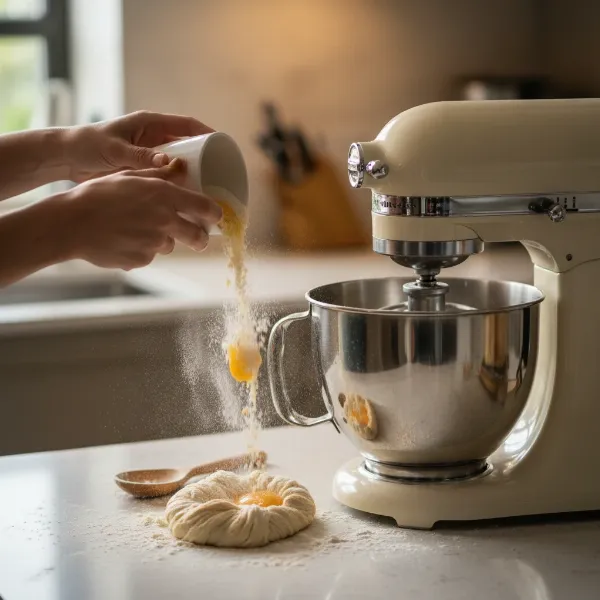 A person confidently using a stand mixer in a modern kitchen, illustrating the practical application of choosing the right bowl size for baking projects.
Mixer Type and Compatibility
Not all stand mixer bowls are universal. Most brands, and even different lines within the same brand (like KitchenAid’s tilt-head versus bowl-lift models), have specific bowl designs that are not interchangeable. Tilt-head mixers, often ranging from 3.5 to 5 quarts, typically have bowls that twist onto the base. Bowl-lift models, common for 5 quarts and larger, use sturdy arms to secure the bowl. Always check your mixer’s specifications or existing bowl’s markings to ensure compatibility before purchasing a new bowl. Additionally, confirm that any new bowl will accommodate your essential attachments, such as dough hooks, whisks, and paddle beaters.
Kitchen Space and Storage
While a larger bowl offers more capacity, it also demands more storage space. If your kitchen is compact or storage is at a premium, a smaller bowl or considering stackable options might be more practical. Assess where you plan to store your mixer and its accessories. Sometimes, owning multiple smaller bowls that nest within each other can be more efficient than one very large, cumbersome bowl.
Budget
Stand mixer bowls vary in price depending on their size, material, and brand. Larger bowls and those made from specialty materials like glass or ceramic generally cost more than standard stainless steel options. Evaluate whether the additional cost is justified by your baking frequency and specific needs. Look for sales or bundles if you’re purchasing a new stand mixer, as they sometimes include additional bowls at a discounted price.
Maximizing Your Stand Mixer’s Potential: Tips and Tricks
To truly get the most out of your stand mixer, consider these expert tips that go beyond just selecting the right bowl size.
One powerful strategy is to have multiple bowls of different sizes or materials. This allows you to multitask efficiently, like whipping egg whites in a small stainless steel bowl while your main dough rises in a larger one. This eliminates the need to wash bowls mid-recipe, keeping your creative flow going.
When uncertain about size, test your recipes mentally or with actual measurements. Visualize your typical batter volume in a prospective bowl. Will there be enough headroom to prevent splashing, especially with airy mixtures? Will the attachments reach the bottom for small quantities?
Lastly, think about your future needs. If you foresee yourself expanding into more complex baking projects or baking for larger crowds, investing in a slightly larger bowl now can save you from an upgrade later. Conversely, if you’re downsizing your baking, a smaller, more manageable bowl might be a better long-term fit.
“The perfect stand mixer bowl isn’t just about capacity; it’s about synergy between your baking ambitions, kitchen reality, and the mixer’s capabilities. A well-chosen bowl is an extension of your culinary hand.” – Chef Elena Rodriguez, Head Pastry Instructor
Choosing the right bowl size for your stand mixer is a foundational step toward mastering your baking skills and enjoying a smoother, more efficient kitchen experience. By considering your baking habits, household size, mixer compatibility, and material preferences, you can confidently select the perfect partner for your culinary adventures. Don’t let an ill-fitting bowl limit your creativity or cause unnecessary frustration. Invest wisely, and watch your baking flourish.
What exciting recipes will you create with your perfectly sized stand mixer bowl?
Frequently Asked Questions
What is the most versatile stand mixer bowl size?
The 5-quart stand mixer bowl is widely considered the most versatile size. It offers an excellent balance for most home bakers, capable of handling small to medium batches of various recipes, from cookie dough and cake batter to whipping cream and kneading moderate amounts of bread dough. It’s often the standard bowl included with many popular stand mixer models.
Can I use a different brand’s bowl with my stand mixer?
Generally, stand mixer bowls are brand and model-specific and are not interchangeable between different brands or even different mixer types (tilt-head vs. bowl-lift) within the same brand. The attachment mechanisms and dimensions vary significantly, meaning a bowl from one brand or model is unlikely to fit another correctly or safely. Always check manufacturer compatibility.
Is a glass or stainless steel stand mixer bowl better?
Both glass and stainless steel bowls have distinct advantages. Stainless steel is durable, lightweight, retains cold well, and is ideal for heavy-duty mixing. Glass bowls offer aesthetic appeal and the benefit of visual monitoring during mixing, often with measurement markings, but they are heavier and more fragile. The “better” choice depends on whether you prioritize durability and temperature control (stainless steel) or visual oversight (glass).
How do I know if a bowl is compatible with my KitchenAid tilt-head mixer?
To ensure compatibility for a KitchenAid tilt-head mixer, check the stamping near the handle of your existing bowl for its quart size. The replacement bowl should match this volume. Also, visually compare the diameter where the latch hooks sit on both bowls; they must align precisely. Finally, verify that the new bowl is explicitly labeled as compatible with “TILT-HEAD” mixers and, ideally, lists specific KitchenAid model numbers that match yours.
What stand mixer bowl size is best for kneading bread dough?
For kneading bread dough, a 6-quart or larger stand mixer bowl is generally recommended. Bread dough requires ample space for proper kneading and expansion, especially if you’re making more than one loaf. A larger bowl prevents the dough from overflowing during the mixing process and allows the dough hook to work more effectively, ensuring even development of the gluten.
Should I get multiple stand mixer bowls?
Yes, many experienced bakers find it incredibly beneficial to own multiple stand mixer bowls. Having bowls of different sizes or materials allows for greater efficiency, especially when preparing multi-step recipes that require separate ingredients to be mixed (e.g., whipping egg whites while butter and sugar cream in another). It eliminates the need to wash a bowl between steps, streamlining your baking process.