Every seasoned home cook understands that culinary success isn’t just about ingredients and technique; it’s also about choosing the right tools. Among the most fundamental of these tools are mixing bowls. You might think any bowl will do, but the truth is, the material of your mixing bowl can significantly impact the flavor, color, and even the texture of your dishes. Understanding the critical difference between reactive and non-reactive bowls is a game-changer, unlocking new levels of precision and preventing unwanted kitchen mishaps. This knowledge is essential for elevating your cooking, ensuring your creations taste exactly as they should, without any unpleasant surprises from kitchen chemistry.
Understanding Reactive Bowls
So, what exactly makes a bowl “reactive”? Reactive bowls are those made from materials that can chemically interact with certain foods, particularly those high in acidity or alkalinity. When these materials come into contact with such ingredients, they can leach metallic ions into your food, leading to undesirable changes. This chemical tango often results in an off-putting metallic taste, which can ruin a delicate sauce or a vibrant marinade.
Common culprits in the reactive category include aluminum and copper. Aluminum is lightweight and an excellent heat conductor, making it popular for many kitchen applications. However, it readily reacts with acidic ingredients like tomatoes, citrus juices, or vinegar. This reaction can not only impart a metallic flavor but also cause discoloration in light-colored foods, turning your hollandaise sauce or whipped cream a grayish hue. Copper, while beautiful and highly efficient at conducting heat, is also highly reactive and can be toxic if ingested in large quantities, which is why copper cookware is almost always lined with a non-reactive metal like tin or stainless steel. Even cast iron, though often praised for its durability, is considered reactive, especially if it’s not well-seasoned or if acidic foods are left in it for extended periods.
Reactive bowls are best reserved for tasks where chemical interaction is either minimal or desirable (like copper with egg whites, a unique case). They are perfectly fine for mixing dry ingredients, tossing a non-acidic salad quickly, or handling foods that won’t sit in the bowl for long.
Understanding Non-Reactive Bowls
In stark contrast, non-reactive bowls are the unsung heroes of the kitchen, designed to remain chemically inert when they come into contact with food. This means they won’t impart any off-flavors, cause discoloration, or alter the texture of your ingredients, preserving the integrity of your culinary creations. For any task involving acidic marinades, delicate batters, or vibrant fruit salads, a non-reactive bowl is your best friend.
The most popular non-reactive materials found in kitchens today include stainless steel, glass, ceramic, and enamel-coated bowls. Stainless steel is a fantastic all-rounder: durable, relatively lightweight, easy to clean, and completely non-reactive. Glass bowls are another excellent choice, offering transparency to monitor mixing and being completely inert, although they are heavier and more fragile. Ceramic bowls, when properly glazed and free from chips, also provide a non-reactive surface, making them ideal for tasks like proofing dough. Enamel-coated cast iron or steel bowls are non-reactive as long as the enamel coating remains intact; scratches or chips can expose the reactive material underneath. Choosing non-reactive materials ensures that your food’s true flavors shine through, especially when working with sensitive ingredients that demand purity.
Common Types of Mixing Bowls
A well-equipped kitchen often boasts a variety of mixing bowls, each material offering distinct advantages. Understanding these differences helps you select the perfect companion for every cooking adventure.
Glass Mixing Bowls
These transparent beauties are a staple in many kitchens, offering both aesthetic appeal and practical benefits.
- Pros: Highly non-reactive, non-porous (meaning no absorption of odors or flavors), easy to clean, and you can see your ingredients mixing, which is great for visual checks. They are also microwave and oven-safe (check specific product ratings).
- Cons: Quite heavy and susceptible to breaking if dropped or exposed to sudden temperature changes.
- Suitable for: Whipping egg whites, mixing salad dressings, melting butter in the microwave, and serving.
- Reactivity: Non-Reactive.
|
Our Picks for the Best Mixing bowl in 2026
As an Amazon Associate I earn from qualifying purchases.
|
||
| Num | Product | Action |
|---|---|---|
| 1 | Glad Mixing Bowls with Pour Spout, Set of 3 | Nesting Design Saves Space | Non-Slip, BPA Free, Dishwasher Safe Plastic | Kitchen Cooking and Baking Supplies, White |

|
| 2 | Priority Chef Premium Mixing Bowls With Lids Set, Airtight Lids, Thicker Stainless Steel, Non-Slip Base, 5 Nesting Steel Bowls for Kitchen, Large Prep Metal Bowl Set 1.5/2/3/4/5 Qt, Black |
|
| 3 | Winco , 8-Quart, Stainless Steel (MXB-800Q) |
|
| 4 | OXO Good Grips 5-Quart Mixing Bowl |
|
| 5 | JoyJolt Stainless Steel Mixing Bowl Set - 6 Piece Nesting Bowls, 5qt to 0.5qt, Ideal for Kitchen, Cooking, Baking and Storage |
|
| 6 | Fox Run Brands 2.75-Quart Stainless Steel Mixing Bowl, 9 x 9 x 4 inches, Metallic |
|
| 7 | Cuisinart Mixing Bowl Set, Stainless Steel, 3-Piece, CTG-00-SMB |
|
| 8 | Glad Mixing Bowls with Pour Spout, Set of 3 | Nesting Design Saves Space | Non-Slip, BPA Free, Dishwasher Safe Plastic | Kitchen Cooking and Baking Supplies, Sage Green |
|
| 9 | Winco 5 Quart Heavy-Duty Stainless Steel Mixing Bowl, Deep |
|
| 10 | Umite Chef Mixing Bowls with Airtight Lids Set, 8PCS Stainless Steel Khaki Nesting Bowls with Grater Attachments, Kitchen Bowls with Non-Slip Bottoms, Size 5, 4, 3.5, 2, 1.5QT for Mixing & Serving |
|
Stainless Steel Mixing Bowls
Often the workhorses of the professional kitchen, stainless steel bowls are prized for their versatility and durability.
- Pros: Extremely durable, lightweight, easy to clean, generally non-reactive, and won’t stain. Many have a non-slip base for stability.
- Cons: Can be scratched by metal utensils, which, while not affecting reactivity significantly, can create rough surfaces. They are also not microwave-safe.
- Suitable for: Kneading dough, whisking, general mixing, and tempering chocolate over a double boiler.
- Reactivity: Non-Reactive.
Plastic Mixing Bowls
Plastic bowls are often the first choice for beginners or those on a budget due to their affordability and light weight.
- Pros: Inexpensive, very lightweight, and available in a vast array of colors and sizes.
- Cons: Can scratch easily, absorb odors and stains (especially from acidic foods like tomato sauce), and some older plastics may contain BPA, though many modern options are BPA-free. They can also degrade over time.
- Suitable for: Light mixing of dry ingredients, kids’ baking projects, and temporary storage.
- Reactivity: Generally non-reactive, but always opt for high-quality, BPA-free plastics to avoid potential leaching.
Ceramic/Stoneware Mixing Bowls
These bowls bring a touch of rustic charm and excellent thermal properties to the kitchen.
- Pros: Beautiful and decorative, excellent at retaining temperature (both hot and cold), and completely non-reactive when properly glazed.
- Cons: Heavy and prone to chipping or breaking if handled roughly.
- Suitable for: Proofing dough, marinating, serving dishes, or keeping food warm or cool.
- Reactivity: Non-Reactive (ensure glaze is intact).
Copper Mixing Bowls
While beautiful and traditional, copper bowls are a specialized item in the mixing bowl lineup.
- Pros: Striking appearance, excellent heat conductor (though less critical for mixing), and has a unique chemical reaction with egg whites that stabilizes them, leading to higher, more stable peaks.
- Cons: Highly reactive with most acidic foods, expensive, and requires careful polishing to maintain its luster.
- Suitable for: Specifically for whisking egg whites.
- Reactivity: Highly Reactive.
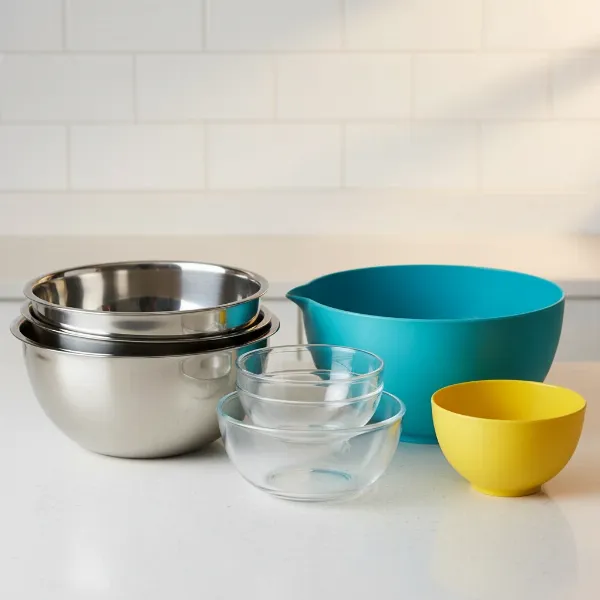 An assortment of reactive and non-reactive mixing bowls made from glass, stainless steel, and plastic, ready for kitchen prep.
Comparison Table: Reactive vs. Non-Reactive Bowls
Choosing the right bowl for the task is crucial for optimal results. Here’s a quick comparison of common mixing bowl materials:
| Feature | Glass | Stainless Steel | Plastic | Ceramic | Copper |
|---|---|---|---|---|---|
| Reactivity | Non-Reactive | Non-Reactive | Generally Non-Reactive (check quality) | Non-Reactive (if glazed) | Highly Reactive |
| Durability | Medium (fragile) | High | Low | Medium (chips) | Medium |
| Weight | Heavy | Light | Very Light | Heavy | Medium |
| Cost | Medium | Medium | Low | High | Very High |
| Cleaning Ease | Easy | Easy | Medium (can stain/absorb odors) | Easy | Medium (tarnish) |
| Best For | Acidic, baking | General prep, dough | Light mixing, dry ingredients | Dough proofing, serving | Egg whites |
Choosing the Right Mixing Bowl for Your Needs
Navigating the world of mixing bowls doesn’t have to be complicated. By considering a few key factors, you can build a collection that serves all your culinary ambitions.
First, determine your primary purpose. Are you frequently making acidic marinades or delicate desserts that require stable egg whites? Your choice of bowl will be heavily influenced by these specific tasks. For instance, a chef focused on French pastries might prioritize a copper bowl for meringues, while a health-conscious cook making vibrant salads will need reliable non-reactive options.
Next, consider the ingredients you’ll be using. If you’re working with lemons, tomatoes, vinegar, or wine, a non-reactive material like stainless steel or glass is indispensable. For dry flour mixtures or non-acidic ingredients, almost any bowl will do, but quality still matters. Remember that leaving acidic foods in reactive bowls for even a short period can start a chemical reaction, so prompt removal and transfer are key.
Material matters beyond reactivity. Think about the weight you prefer. Do you need something lightweight for quick whisking, or a heavy, stable bowl for vigorous kneading? Durability is another factor; if your kitchen is a high-traffic zone, robust stainless steel might be a better choice than fragile glass. Also, consider ease of cleaning and maintenance. Many non-reactive bowls are dishwasher-safe, simplifying cleanup after a busy cooking session.
Finally, don’t underestimate the value of reputable brands and quality construction. While budget options exist, investing in good quality bowls ensures longevity and consistent performance. A well-made bowl, whether reactive or non-reactive, will be a reliable partner in your kitchen for years to come.
“The subtle science of cooking extends to every tool we use. A reactive bowl can silently sabotage a dish, while a non-reactive one safeguards its true character.” – Chef Elena Rodriguez, Culinary Arts Instructor
Conclusion
The distinction between reactive and non-reactive bowls is more than just kitchen trivia; it’s a fundamental aspect of culinary science that profoundly impacts your cooking. Understanding which materials interact with food and which remain neutral empowers you to make informed choices, preventing unwanted metallic tastes, discoloration, and texture changes. By thoughtfully selecting the right bowl for each task – whether it’s a trusty stainless steel for marinades, a delicate glass for creamy desserts, or a specialized copper bowl for perfect meringues – you safeguard the integrity and flavor of your dishes. Building a diverse collection of both reactive and non-reactive bowls means you’ll always have the ideal tool at hand, ready to tackle any recipe with confidence and precision, elevating every meal from good to truly exceptional. What new culinary adventures will you embark on now that you understand the power of your mixing bowls?
Frequently Asked Questions
What happens if I use a reactive bowl with acidic food?
Using a reactive bowl, such as aluminum or unlined copper, with acidic foods like lemon juice, tomatoes, or vinegar can cause a chemical reaction. This reaction can leach metallic ions into your food, resulting in an unpleasant metallic taste, discoloration of light-colored ingredients, and potentially altering the texture of your dish.
Are all plastic bowls non-reactive?
Most modern plastic bowls are considered non-reactive and generally safe for mixing various foods. However, lower-quality plastics can sometimes absorb odors and stains, and there might be concerns about chemicals like BPA leaching into food, especially when exposed to heat or scratches. Always choose high-quality, food-grade, and BPA-free plastic bowls for peace of mind.
Can I use a reactive bowl for kneading dough?
Yes, you can generally use a reactive bowl, like an aluminum one, for kneading dough. Dough, in most cases, is not highly acidic or alkaline, and the contact time with the bowl is relatively short during the kneading process. However, for proofing dough, especially if it contains acidic ingredients like sourdough starter or citrus, a non-reactive bowl (like glass or ceramic) is a safer choice to avoid any unwanted interaction over longer periods.
Is well-seasoned cast iron truly non-reactive?
A well-seasoned cast iron bowl develops a protective, non-stick layer that significantly reduces its reactivity. While it’s still technically a reactive material, the seasoning acts as a barrier, making it much safer for brief contact with acidic foods. For extended simmering or marinating of highly acidic ingredients, however, a truly non-reactive material like stainless steel or glass is still recommended to completely avoid any metallic off-flavors.